
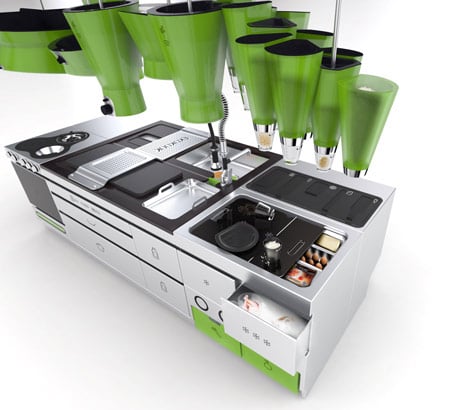
When I was looking for pictures about industry symbiosis, this interesting one caught my eye. As I followed the url of this attention-seeker-yet-in-a-good-way photo, I was directed to an article entitled " Ekokook by Faltazi" in a website called DEZEEN.
DEZEEN
This website features architecture, design and interiors projects from around the world. According to their About Page in their website, Dezeen was launched at the end of November 2006 and has grown rapidly to become one of the most popular and influential architecture and design blogs on the internet. They claim that they now get over two million visits a month, and traffic is doubling every year. They also got some prestigious recognition in Time magazine’s Design 100 list of the most influential forces in global design and in Design Week magazine’s Hot 50 list of key figures in design.
BRIEF HISTORY

Dezeen started as a simple blog in 2006 by its author, Marcus Fairs (left picture). He is known for his books Twenty-First Century Design (published October 2006 and republished in June 2009) and Green Design (published March 2009) and former founding editor of icon magazine.
(published October 2006 and republished in June 2009) and Green Design (published March 2009) and former founding editor of icon magazine. In the year 2007, he was joined by Rupinder Bhogal and together they set up Dezeen Limited, which they now run as co-directors. They launched the recruitment site Dezeen jobs in 2008, followed by Dezeen Watch Store in 2010.
Unfortunately, I cannott find any consistent or valid photo of Rupinder Bhogal, co-author of Dezeen.
EKOKOOK BY FALTAZI
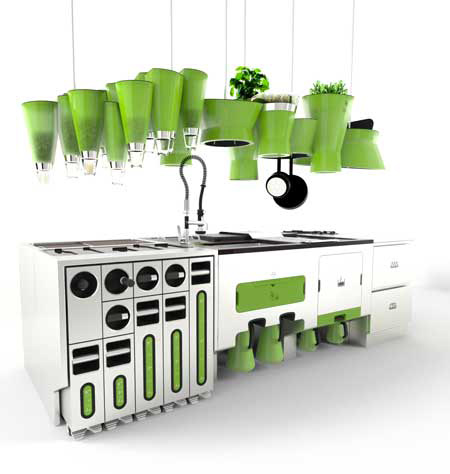
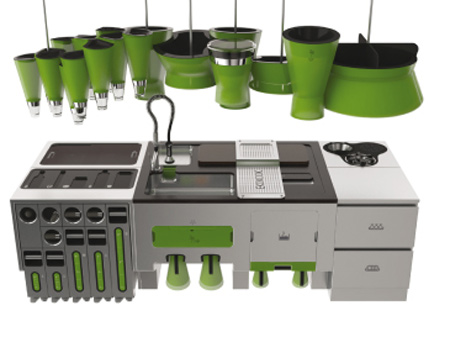
Ekokook by Faltazi is the article where that amazing picture above and the picture on the right was featured. Designers Victor Massip and Laurent Lebot of Faltazi, designed a conceptual system where water is recycled and waste is broken down by worms inside the kitchen. They called this project as EKOKOOK. This project aims to process waste as close as possible to the point where it’s produced.
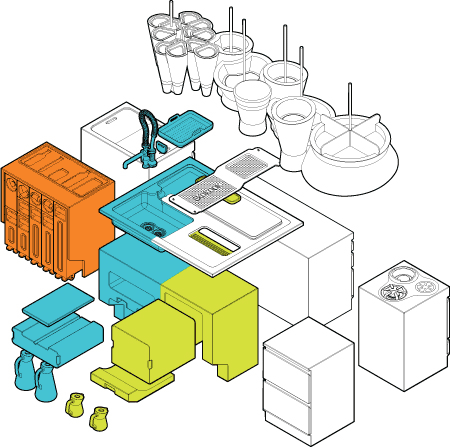
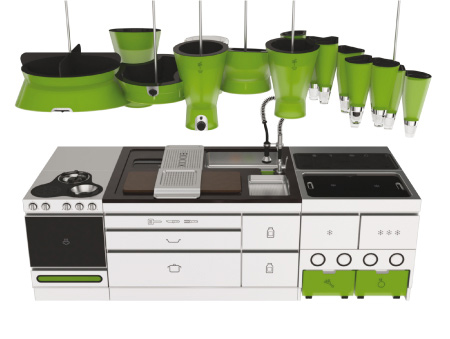
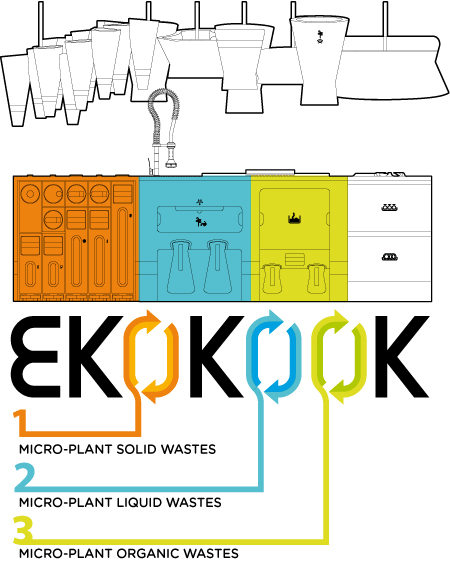
The picture above shows the exploded structure of Ekokook. The design incorporates storage containers for packaging, a reservoir under the sink for collecting water to be reused and a container where earthworms break down organic waste.
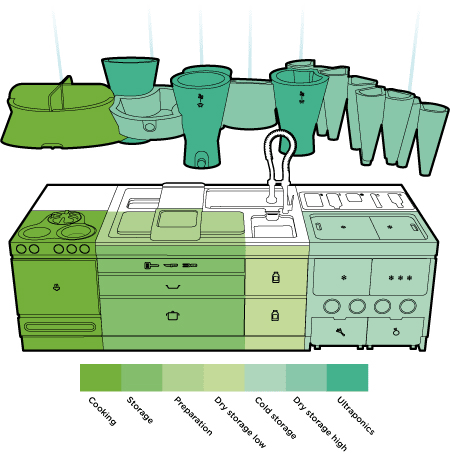
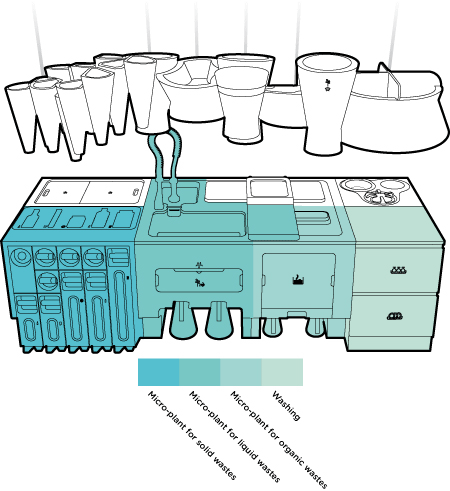
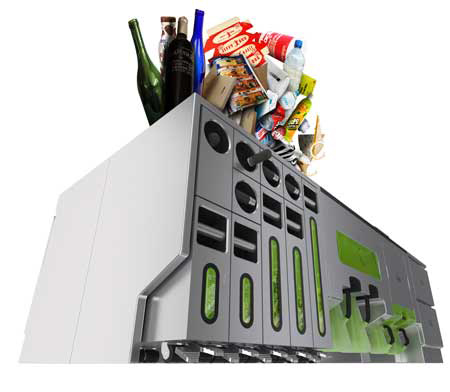
According to the article, there are three built-in micro-plants for three recycling functions. The kitchen is where most household wastes are produced. If waste management is expected to be effective at both the individual and the collective level, selection and processing must begin as soon as the waste product appears. When peeling carrots, for example, we should be able to dispose of peelings straight away by emptying them into the earth worm composter direct from the work surface. Similarly, when we wash salad leaves, we should be able to choose to save the water for watering household plants. Simple actions like these must be encouraged and made easy by adequate fittings. The same goes for the disposal of solid wastes.
As said in the article, the information below is from the designers themselves :
MICRO-PLANT 1
Solid wastes: selecting, processing, storage.
Solid wastes: selecting, processing, storage.
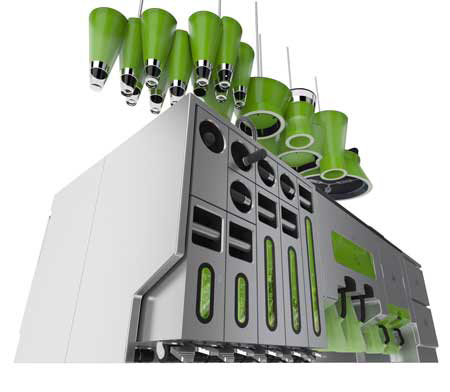
Solid wastes have no smell. This means that they can be kept longer, once their volume has been reduced to a minimum. On the scale of the city, this enables council trucks to collect waste less frequently, which means less cost for the community, less noise nuisance, and less atmospheric pollution. We [designers] have broken down the receptacle for solid wastes into five units for processing glass, paper, plastics, metals and miscellaneous waste. The volume of each unit corresponds to dimensions that suit an average family (two adults & two children). Units can be customized to suit user profiles and to interact with services offered by the community.
We[designers] have opted for a system of components organized by bloc and by function: in the high part are different hatches, and in the lower part are the units for reducing volumes, and storage containers on rollers. The devices we[designers] propose to reduce the volume of wastes are machines activated by hand: a steel ball, like the ball in a pinball machine, to break glass, an endless screw like a nut-cracker to compress cans and water bottles, and a manual shredder-crusher to shred paper before turning it into briquettes.
MICRO-PLANT 2
Water cycle: use, collecting, recycling.
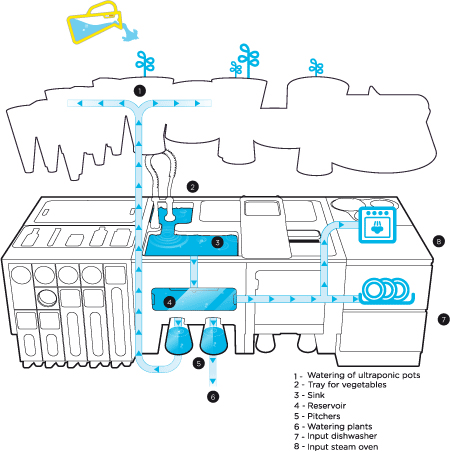
Inspired by real-size civil engineering works for controlling water, such as locks and dykes, which move masses of water for irrigation, we[designers] have built in a double sink for retention, with an intermediate reservoir situated below the sink and two pitchers that collect kitchen water that has no grease scum. This enables users to recycle clean water by using it to water household plants. The dishwasher and steam oven can also be filled with water kept in the intermediate reservoir.
 A double plug is installed in the sink bottom. The user can direct the water in the sink to its destination simply by activating one plug or the other. A filter removes particles suspended in the water to ensure that it is clean and of good quality. A simple device like this enables a saving of up to 15 litres per day, which is equivalent to what is needed to run a dishwasher load.
 The entire intermediate reservoir can be lifted out to be washed, in order to meet standard hygiene norms.
MICRO-PLANT 3
Processing & recycling organic wastes: the earth worm composter
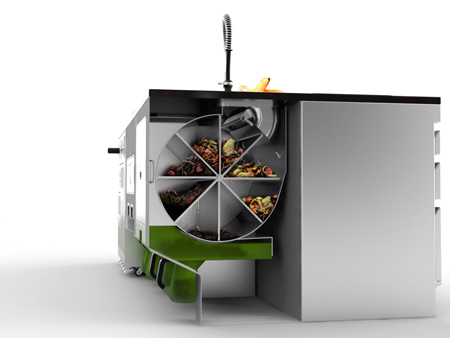
"My garbage bin is alive!" As its name implies, the earth worm composter uses earth worms to break down organic wastes. All sorts of green wastes are produced in the kitchen: fruit and vegetable peelings, scrapings, left-overs, etc. This device aims at processing these wastes as close as possible to the place where they are produced – in the kitchen. Bringing real live earth worms into the kitchen calls for the design of a container to rationalize manipulation. It must be sealed, autonomous, and simple to manage. We propose a container unit in the form of a drum that rotates a notch day by day. Wastes shift gradually and as they are broken down and after three months maturing are sifted into a drawer as ‘lumbri’compost’. Liquid effluent drains into two pitchers. Diluted with ten parts water, it makes a rich liquid plant food ideal for indoor and outdoor plants.
Some of us started with the simplest form of Industrial Symbiosis which is recycling. And some further studied to properly apply its method. Concepts of industrial symbiosis had been in everyone’s mind for some time, but the big thing was to apply them effectively in the home. For a closed cycle mode, each waste should be turned into a new resource, each drop of water that fell on the roof or came from a tap should be used to the utmost instead of going straight down the drain and each watt of wind and solar power produced by the house should be valorized on the spot.
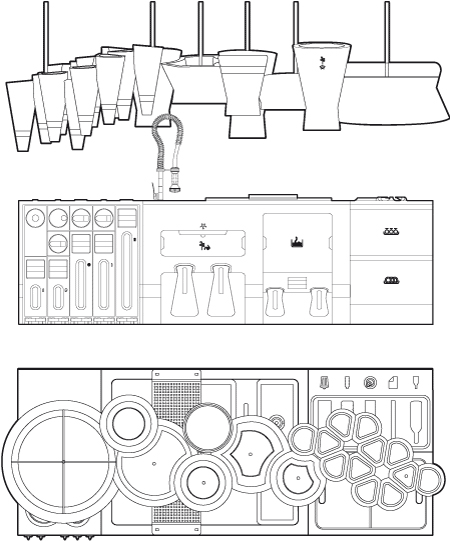
As stated in the article, Ekokook grew out of an experimental approach based on the analysis of the nerve centre of every home: the kitchen. The place where we store food and prepare food, and produce and evacuate wastes is a vital core area for exchanges and convergences. It is also a place that generates all sorts of pollution. Which makes it the ideal focus for a study in eco-design.
With these, Ekokook is implementing a global prospective research project for eco-friendly habitat in the real world: the Faltazi Lab. The founders are trying to answer the question of how to introduce ecological projects into the home. How to upgrade existing housing without advocating complete reconstruction. The obvious responses are those that use non-structural elements of living space (doors, windows, equipments…), which can be mass-produced industrially and are simple to install.
WOW. This project is just amazing. The Faltazi Lab has great ideas in store. And this Ekokook is what innovation is all about. I am no architect, I am no civil engineer and I am no environment expert. I don't know how to create those spectacular designs, I don't know how to construct those civil engineering related stuffs discussed on the article, I don't have the expertise to tell what's the best for our environment. All I have are ideas got from books that I've read, knowledge gained from elders and professionals, and lessons from my best and worst experiences. And with these I can say that, Ekokook is a very inspirational eco-designed project that can boost up the ideas and confidence of those people who are creative enough to make more of these rare experiments. I hope this article will serve its purpose especially to those wanna-be-scientists out there! :)
SOURCE/S:
Thanks for reading! :)

This innovation will be very useful to the society especially in urban areas. I hope that these will soon be realized.
ReplyDeleteWow! This is a great innovation. Great job for a very good design. I think I should have this when I have my own house. Eco-friendly innovations should pursue by many people because it will benefit not only the environment but also us. This will be very useful for everyone of us and will make us aware on the importance of the environment.
ReplyDeleteNice! These wonderful designs and ideas should be supported not just by environmentalists but also by society itself. This could be a small step in making a significant difference in the green movement but a step nonetheless.
ReplyDelete